

Miguel Ángel Mateo-Casalí (opens in a new tab), a researcher at CIGIP, was part of team QUIASMA, which won the challenge set by Damm (opens in a new tab) at the first UPV Impact Hackathon (opens in a new tab). His CIGIP colleague Beatriz Andrés Navarro (opens in a new tab) reached the final with another of the teams working on the Damm challenge.
Organised by UPV Innovación (opens in a new tab) and Innova&acción (opens in a new tab) (Fundación Politécnica), the hackathon took place on 17 November. Its aim was to connect research at the Universitat Politècnica de València with real business challenges and to open up new routes for knowledge transfer. Over 12 hours, more than 30 researchers working in seven multidisciplinary teams tackled three challenges put forward by Vicky Foods (opens in a new tab), Simetría Grupo-Ciclagua (opens in a new tab) and Damm.
Supported by mentors and a range of innovation tools, the teams shaped seven R&D proposals in dialogue with the companies and presented them to a jury made up of Marta Chillarón (Fundación LAB Mediterráneo), Pedro de Álava and Rafael López Moya.
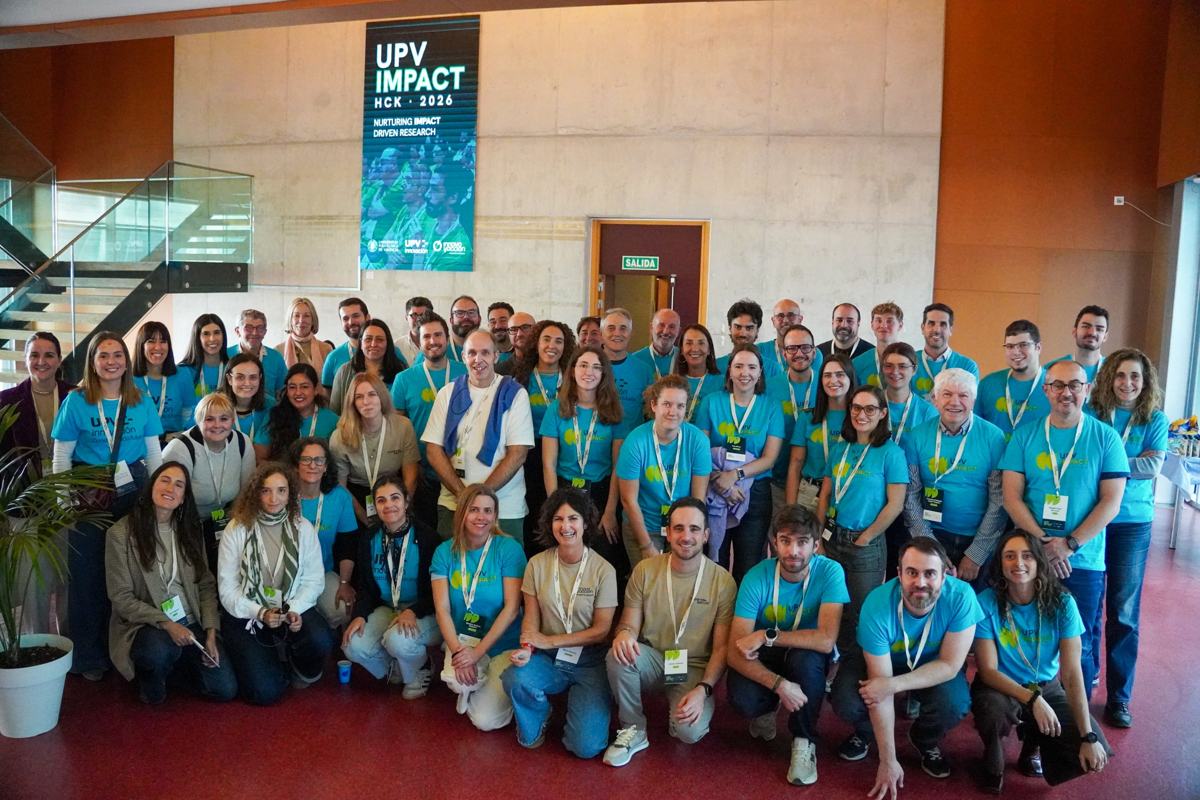
Pronóstico de Sed: from weather forecast to supply decision
QUIASMA, made up of Ana Gabriela Fernández Garza, Alberto García Prats, Carlos Martín Abellán, Miguel Ángel Mateo-Casalí and Lucía Ivana Bernad Palomares, presented “Pronóstico de Sed” (literally, a thirst forecast), a prototype control centre for Damm’s supply chain team that links weather to beer demand in each Spanish province. The tool takes forecasts from the European (ECMWF) and US (GFS) weather models and turns them into a four-week demand outlook, complete with its uncertainty and a specific action attached.
The prototype is organised into several modules:
- Control centre: a province-level map showing the gap between forecast demand and plan, and a prioritised alert queue giving the province, week, recommended adjustment in hectolitres, owner and deadline.
- One-month forecast: a band of likely demand (10th to 90th percentiles) that widens with the horizon, the probability of exceeding the plan based on 20 scenarios, and a breakdown of the forecast by driver. Given the cost of running short and the cost of overstocking, it suggests the quantile at which to set stock, following the classic newsvendor approach.
- Excusómetro (the excuse meter): splits each week’s deviation from plan into the effect of weather, of holidays and events, and everything else, and flags the areas where the weather does not explain the gap.
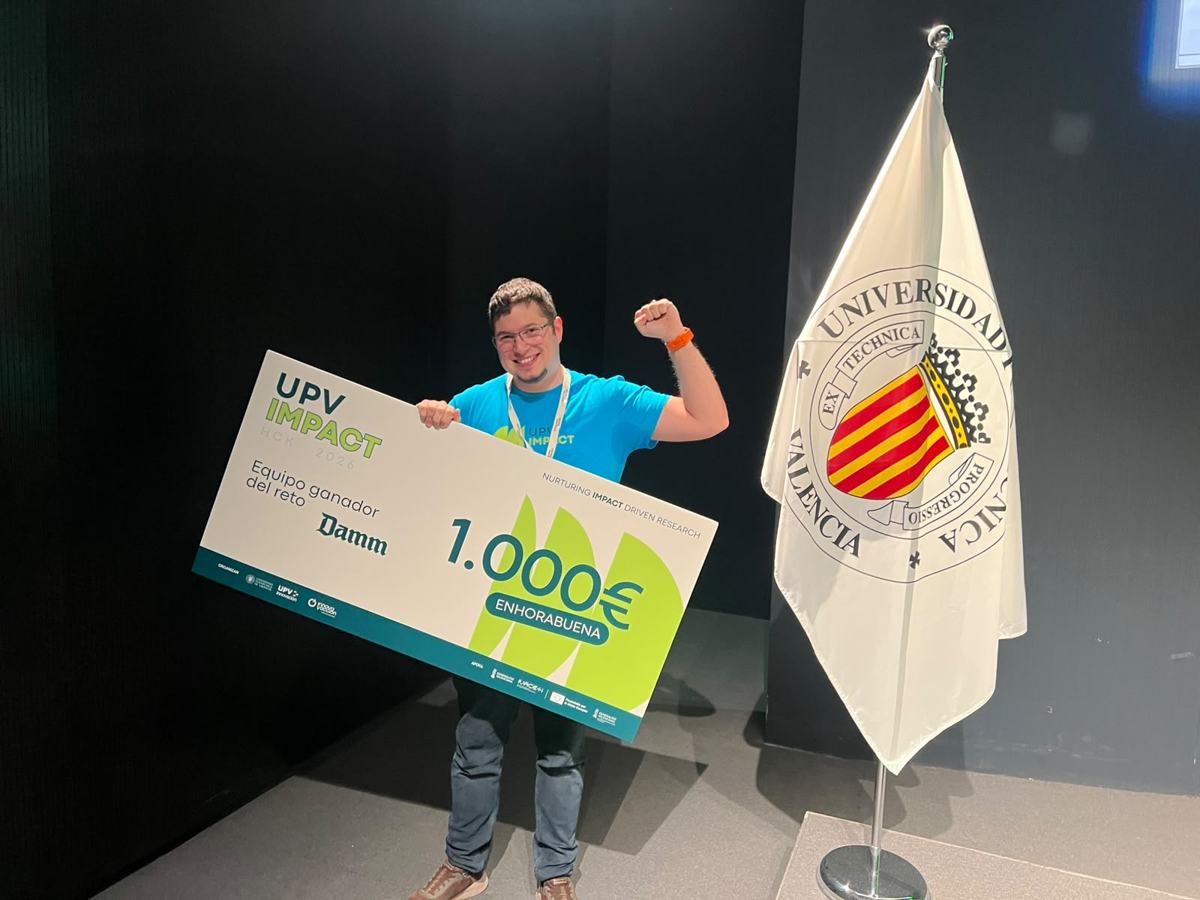
The team received a prize of 1,000 euros. According to the organisers, the proposals developed on the day open the door to new collaborations between the university and the participating companies, and to future R&D projects. Further details are available in the LinkedIn posts by UPV Innovación (opens in a new tab) and Innova&acción (opens in a new tab).
The activity was co-funded by the Valencian Institute for Competitiveness and Innovation (IVACE+i), Generalitat Valenciana.